

For Diwali, arrange the living room for easy movement and comfortable seating, while keeping the pooja space clean, accessible and peaceful. Traditional Vastu guidance can inform its direction, colours and placement, but the layout should suit the home. Warm lighting, safe diya placement, discreet storage and simple festive accents help both spaces feel welcoming without clutter.
Table of Contents
Introdcution
Diwali brings relatives into the living room, children move between rooms, and snacks land on every spare surface. The pooja room becomes the quieter centre. Thoughtful planning lets both spaces feel connected without competing. Vastu offers traditional guidelines, while comfort, ventilation and safety should shape final decisions.
This guide provides useful tips to arrange both the living room and pooja room based on the principles of Vastu, thus making the house cosy and festive-ready for all family members.
How Should The Living Room Be Arranged For Diwali?
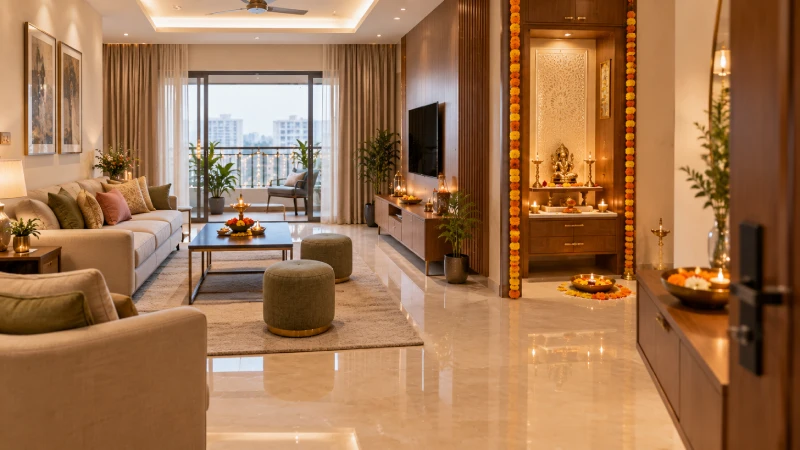
During Diwali, the living room sees more activity than usual, with family members gathering and guests coming and going. Keeping a clear path between the entrance, seating area and pooja space makes it easier for everyone to move around. Furniture should leave enough room to walk comfortably without blocking the balcony door or squeezing past chairs.
- An open centre helps. Side tables or extra stools can be moved aside to keep the main walkway clear.
- Seating can follow tradition. Vastu advice often favours arrangements that let people face east or north. This should remain a preference, not a reason to compromise conversation or circulation.
- A calm focal point works well. A piece of art or restrained festive arrangement can anchor the room without overcrowding it.
- Flexible seating saves space. In Mumbai apartments, nesting tables or pouffes can be more useful than a large centre table.
Families planning new interiors can work with an interior design company to coordinate lighting, storage and furniture proportions before festive décor is added. This helps in a premium 2 BHK, where oversized pieces can quickly make the living room feel tight.
Which colours and lights work well in a Vastu-led living room?
Soft whites, warm beige, muted greens and earthy shades can make a room feel settled. Diwali colour can come through cushions, flowers, runners and artwork rather than a full makeover. A few coordinated accents feel more intentional than several competing colours.
Warm white ambient light, supplemented by a floor lamp or wall lights, is good for softer evening lighting. The string lights should not come into contact with any curtain or upholstery, and the cords must not be on the pathway. Diyas require a stable base that can withstand the heat and should be kept away from flowers and paper décor items.
What is the right direction for the pooja room?
Traditional pooja vastu often recommends the north-east for a pooja room or mandir, with east also considered favourable. The direction of pooja room placement should also account for access, ventilation, and cleanliness. In an apartment, a dedicated niche or compact cabinet may be more realistic than a separate room.
- A tidy shrine feels calmer. Matchboxes, incense and prayer books can be stored in a drawer to keep the visible surface clear.
- Practical materials matter. Wood, stone or easy-to-clean laminates can work when the finish suits the home and is easy to maintain.
- Access should be comfortable. Enough space is needed for family members to stand or sit during prayers. An open door should not interrupt the ritual.
- A simple backdrop is enough. A light-toned panel or subtle carving can distinguish the space without making it visually heavy.
If the floor plan does not allow a north-east placement, a clean, accessible prayer corner may serve the household better than a major structural change just to follow a guideline.
How can the pooja space feel special without becoming cluttered?
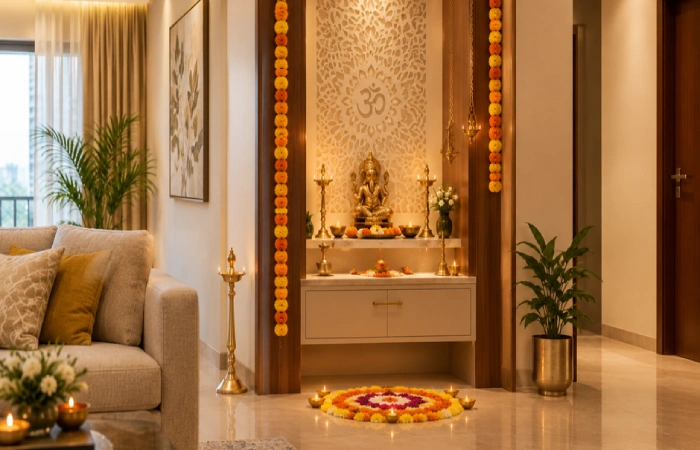
Fresh marigolds, a small rangoli and brass lamps can bring a festive feel to the pooja space without taking up too much room. The trick is to keep the decorations in proportion to the mandir. An elaborate floral arch may overwhelm a compact prayer corner or restrict airflow. Flowers and fabric should also be kept away from flames, and lit diyas must never be left unattended.
The space also needs to work beyond Diwali. A mandir that looks beautiful during festivals should be easy to clean, organise and use during daily prayers. This is where smart interior planning makes a difference. Bonito Designs’ Life Design philosophy puts everyday routines, family needs and personal preferences at the heart of home interiors. It is inspired by celebrity design sensibility, with the notion that a pooja corner should feel personal and meaningful, while fitting naturally into the rhythm of the home’s everyday life.
How can Mumbai homeowners balance Vastu with apartment layouts?
In Mumbai high-rises around Andheri, wall space, windows and electrical points may limit mandir placement. A designer can assess the floor plan, then plan a compact niche, concealed storage and layered lighting. Homeowners comparing interior designers in Andheri should look for practical planning as well as an eye for finishes, so the shrine, seating and guest movement work together.
Preparation should always be kept easy. Clean surfaces a day before, check the lighting, ensure space for the guests and move fragile decorations away from pathways to ensure the house is prepared without being deprived of its normal charm.
FAQs
- Which direction is considered favourable for a pooja room?
Traditional Vastu prefers the north-east or east. The positioning of the home and the comfort of its occupants are important too.
- Can a pooja unit be placed in the living room?
Yes, a clean and quiet nook or cabinet works as long as it is easily accessible, maintained, and separated from regular or everyday clutter.
- How can diyas be used safely indoors?
Diyas must stay inside on stable and heatproof surfaces away from curtains and flowers. Flames must never be left unsupervised.